

Chablis wines come from the region of the same name in France, located in the northwestern part of Burgundy near the town of Auxerre, about 200 kilometers from Paris. The region is truly picturesque—captivating with its scenery, wines, and gastronomy—but here we’ll focus on our favorite golden drops of Chardonnay.

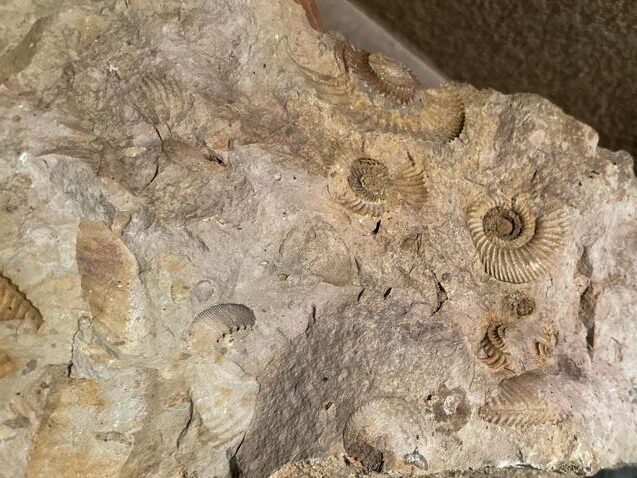
The story of Chablis dates back 150 million years—but don’t worry, this isn’t a history lesson! The key point is that this part of Burgundy was once covered by the sea, which left the soil rich in fossils and shells—giving the wines their unique, almost magical character.
The quality of these wines was already recognized by medieval French kings at the court in Paris. Thanks to river connections, Chablis wines were easily transported to the royal table and from there spread across France and later throughout Europe. Today, Chablis wines are globally renowned and protected by the AOC (Appellation d’Origine Contrôlée) designation.
All Chablis wines are made exclusively from one grape variety—Chardonnay. These are dry wines known for their refined minerality and subtle salinity. Here, Chardonnay expresses itself like nowhere else, drawing character from marine-rich soils far from the sea, as well as from the region’s semi-continental climate, which is cooler than the rest of Burgundy. This creates a perfect balance between sugar and acidity—pure harmony.

The vineyards are divided into four remarkable appellations along the Serein River, each with its own characteristics shaped by soil composition, orientation, and sun exposure:
Svaka apelacija podliježe strogim proizvodnim propisima, a što je apelacija smještena više u hijerarhiji, to je grožđe posebnije, a propisi stroži. Krenimo od hijerarhijski najniže ka najvišoj.
Petit Chablis vineyards lie at altitudes between 230 and 280 meters. These wines have a bright straw-yellow color with green reflections. On the nose, they offer aromas of white flowers—mainly hawthorn and acacia—complemented by citrus notes of lemon and grapefruit. On the palate, they are light, fresh, and easy-drinking, with balanced acidity and a distinct mineral, slightly saline character.
They are best enjoyed young, within two years of harvest. As an aperitif, serve at 8°C, or at 9–10°C with food. Their minerality pairs beautifully with oysters and raw fish, and they can also handle richer foods like eggs and snails. They go well with goat cheese and hard cheeses such as Gouda or Gruyère—essentially, a great match for many French classics.
Chablis wines make up the largest portion of the region’s production. They are pale gold or greenish-gold in color, with a fresh, mineral-driven aroma featuring flint, green apple, and lemon. Secondary aromas often include linden, mint, and acacia. With aging, the color deepens and spicy notes develop on the palate. The finish is long and refined.
Serve at 10–11°C, ideally when young—after two to three years. They pair wonderfully with grilled or poached fish and poultry. They also work beautifully with asparagus—famously difficult to pair—as well as with bold, exotic dishes like curry, or more delicate flavors like sushi. They can also be enjoyed as an aperitif—though we can’t quite decide whether we prefer them before or during a meal.

This is where things get serious. Different vineyard sites produce different expressions, but all share a strong structure and a long, captivating finish. These exceptional wines have a pale golden color. Their bouquet doesn’t open immediately, so they benefit from a bit of aeration. They are built for aging—best enjoyed after five years, or even ten for older vintages.
Serve at 10–11°C. Thanks to their aromatic complexity, they pair with a wide range of dishes. Their depth complements cooked oysters and fish in sauce. More mineral Premier Cru wines pair well with poultry or veal in white sauces, while more expressive styles work beautifully with snails.

Finally, the best of the best—Chablis Grand Cru. These wines have a greenish-gold color that evolves into a pale yellow with age. They are ideal for long-term aging and are best enjoyed after 10 to 15 years, though some can age even longer—truly impressive. Their aromas are intensely mineral, accompanied by notes of linden, nuts, honey, and almonds. Some also develop subtle mushroom notes.
They are beautifully balanced, full-bodied, and vibrant. Due to their richness and depth, they are served slightly warmer, at 12–14°C. They pair excellently with foie gras, as well as shellfish—especially lobster and langoustines. They also work well with fish or poultry in creamy sauces, while their lively character complements the briny taste of oysters.
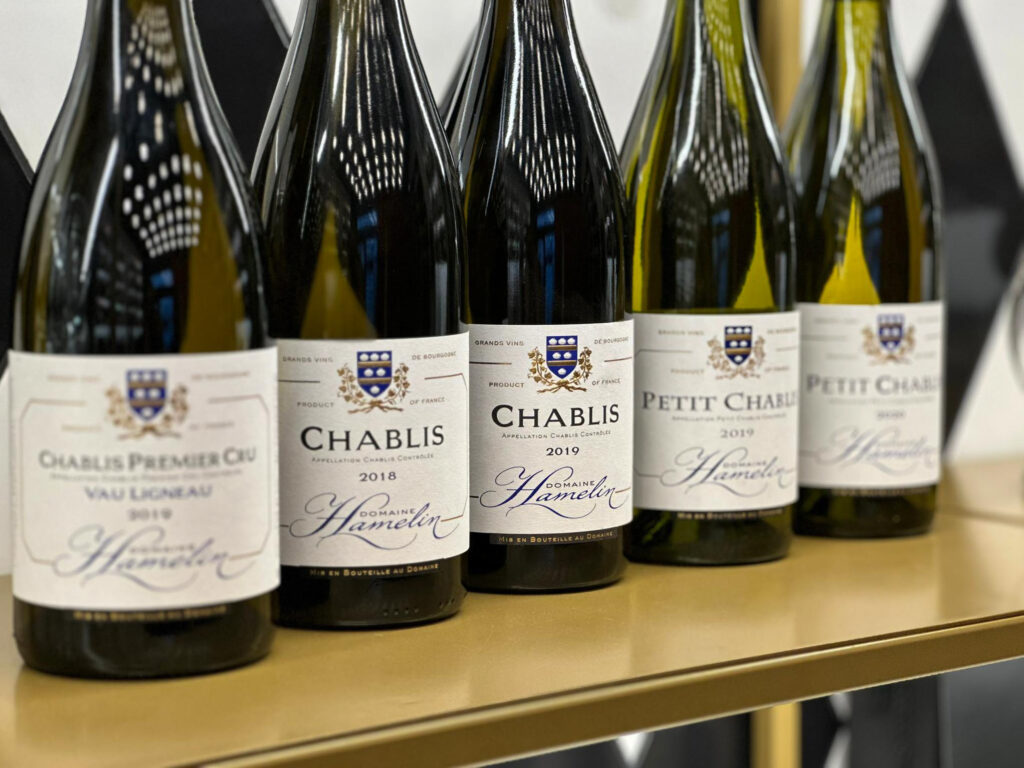
After tasting across all appellations, it’s clear why Chablis is considered a symbol of white wine—whichever you choose, you really can’t go wrong. We usually select them based on the food, and they never fail to exceed expectations.
At the Vinolog wine shop, you can find Chablis from three different producers: Hamelin, De la Motte, and Daniel-Etienne Defaix. Our wine experts will be happy to help you choose the perfect Burgundy for you. We’re waiting for you in Trešnjevka!